
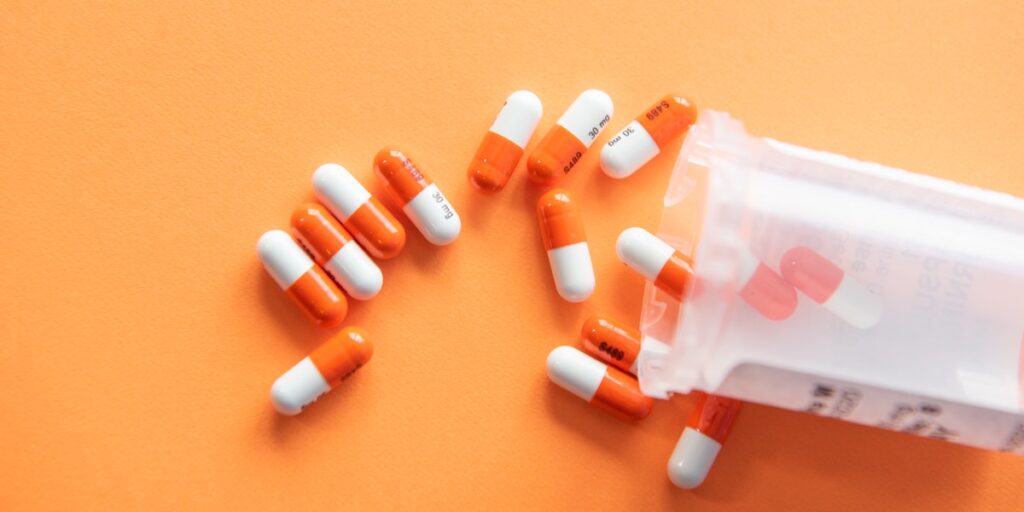
 Antimicrobials are used to kill viruses, bacteria and other pathogens and prevent any further growth.
–
How are antimicrobials used in drugs and medicine?
Enter any supermarket and you will find shelves full of medicines and drugs to help overcome an infection. So many in fact, that it can become hard to tell what medicine works for what illness. Antimicrobials are used in many medicines to kill viruses, bacteria and other pathogens and prevent any further growth.
Disinfectants are commonly used antimicrobials that reduce transmission of pathogens on surfaces and touch points, such as door handles and push pads. But how can antimicrobials work in the body, and how can different antimicrobial solutions work in tandem to keep you healthy and safer in a post-pandemic world?
–
What are antimicrobial products?
As briefly mentioned, antimicrobial is an umbrella term to describe a substance that can combat the growth of bacteria, viruses and bacteria. Antibiotics are one of the most popular antimicrobials which can only kill bacteria. On the other hand, antivirals are very effective at eliminating viruses.
In todays day and age, we are fortunate to have the choice of many different antimicrobial products ranging from natural to more synthesised solutions to infection.
Whilst each kind has its own benefits, the results are vastly the same. Only certain antimicrobials can be used in drugs and medicine, and these are often naturally occurring antimicrobials.
–
The Antimicrobials Used to Cure Illness
The discovery of antimicrobials such as penicillin in the 1940s helped lay a path to a much better quality of life for those who caught infections. Penicillin has since been used as a natural antimicrobial to help treat infections such as strep throat, gonorrhoea and many others that before never had a cure or viable treatment.
Those who had infected limbs as well often had no choice but to undergo amputation, but nowadays a small course of antibiotics can often treat most bodily infections.
–
What else can antimicrobials treat?
Antimicrobials can be used in drugs and medicine to treat almost all infections to some degree. These include bacterial infections, viral infections and fungal infections.
Increased use of antimicrobials over the past few years has been linked to a rise in antimicrobial resistance (AMR) which we have written about in more detail in another article. This is where the current repository of antimicrobial products we possess are no longer have the same effect against infections and are unable to stop their growth.
To stop the risk of antimicrobial resistance and the rise in “super bugs” (infections that are resistant to all known antimicrobials), there are a few things that can be done. Many people are taking antimicrobial drugs or medicines to treat things that do not necessitate the need for such remedies, meaning their bodies are building up an immunity to antimicrobials where it is not needed.
Stewardship of antimicrobial prescription is one of the core ways to help lower the speed of antimicrobial resistance. As antimicrobials will always evolve and mutate, there is no way to fully stop antimicrobial resistance, but the process can be slowed.
Whilst many people question the safety of antimicrobial drugs, if used in accordance with the stated doses then they can not cause any further harm.
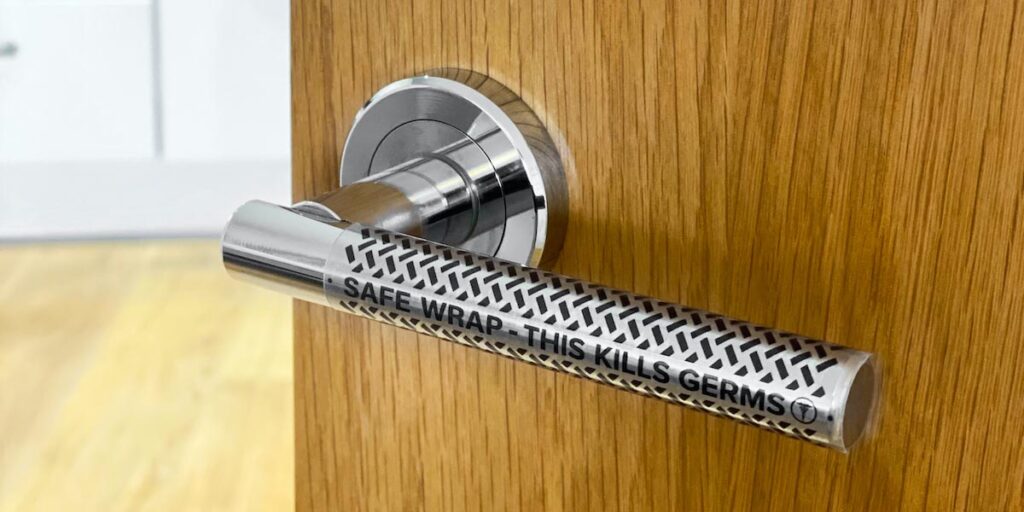 SAFE WRAP™ Clear Antibacterial Door Handle Wrap
–
Other Uses for Antimicrobial Products
Antimicrobials are used in a wide array of drugs and medicines to kill off infections, but in recent years they have become ever more popular in products designed to prevent infection in the first place.
Using the latest technology, silver ions have been used to design and produce products that reduce the transmission of surface-to-surface infections on popular touch points.
Products such as our Safe Pads and Safe Wraps reduce the chances of cross-contaminations of pathogens including SARS-CoV-2 which is known for creating the COVID-19 virus.
