
What makes up many popular antimicrobial products?
–
Chemical Agents in Antimicrobial Products
Turn on the news or log into your social media accounts in the past 18 months and it’s highly likely you’ll have seen conversations or advertisements for a range of antimicrobial products.
As the coronavirus pandemic spread across the world, more and more of us became increasingly conscious of our hygiene, from handwashing to sanitising as well as ensuring work surfaces are regularly disinfected.
Antibacterial products became all the rage, with bottles of handwash and hand sanitisers flying off the shelves, but it is the antimicrobial products in particular that play an important role in preventing the spread of viruses.
It’s been estimated that over 700 antimicrobial-infused products are available, including over 75% of liquid soaps. In this piece we’re going to look at what makes up many popular antimicrobial products, in particular the antimicrobial chemicals used in them.
–
What are antimicrobial products?
Harmful bacteria, viruses and fungi exist in the atmosphere and can be easily transmitted either through poor preventive measures, poor hygiene or simple proximity between people.
Antimicrobials prevent those harmful bacteria and viruses from spreading by preventing their growth.
Many antimicrobials occur naturally and can be found in plants, moulds and oils, with their uses going back centuries to treat illness and disease.
There are thousands of natural antimicrobials, particularly in essential oils and plant extracts, that give protection against bacteria, fungi and viruses. Naturally occurring antimicrobials include tea tree oil, rosemary oil, turmeric oil and green tea extract.
However, plant extracts and essential oils aren’t the only naturally-occurring antimicrobials; they can also be found in metals such as silver, zinc and copper. Modern technology allows for silver fibres to be woven into everyday products like wraparound door handles, screen protectors and hygienic door panels, all working to prevent the spread of harmful bacteria.
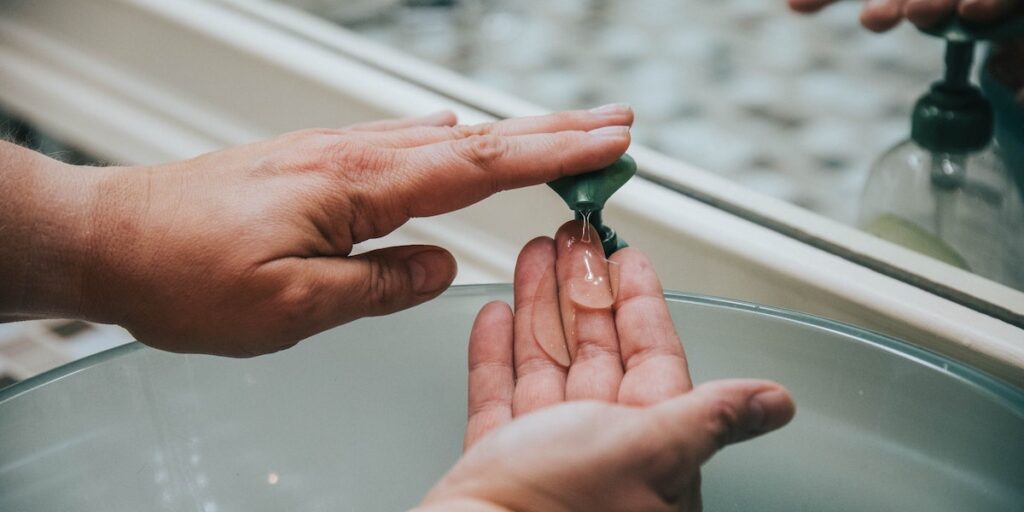
Soaps and hand washes are examples of common antimicrobial products.
–
What products contain antimicrobials?
Antimicrobial products can be found in all sorts of places. There are thousands of different antimicrobials that are used in hygiene and disinfection products, both naturally occurring and synthetic. Examples of products which contain antimicrobials are:
- Soaps and handwashes
- Hand sanitisers
- Toothpastes and mouthwashes
- Kitchen sponges
- Chopping boards
- Clothes
You’ll also find them in cleaning products used in the home and industrial settings, due to their reliability. Such products include bleaches, detergents, window cleaners and sterilisers.
–
How do antimicrobial products work?
Antimicrobial products work at a cellular level to disrupt the growth and reproduction of microorganisms such as bacteria, viruses and fungi. When used on surfaces, they create an environment that prevents microorganisms from thriving, including bacteria, mould and mildew.
Antimicrobials protect all kinds of everyday products, from countertops and work surfaces to children’s toys, textiles as well as hospital equipment, doors and fixtures.
They work by damaging the protein, cell membrane, DNA, and internal systems of a microbe, causing it to die off. Some antimicrobial agents work differently but achieve the same result; for example most disinfectants and antiseptics kill bacteria immediately by causing the bacterial cell to explode and preventing the growth of bacteria.
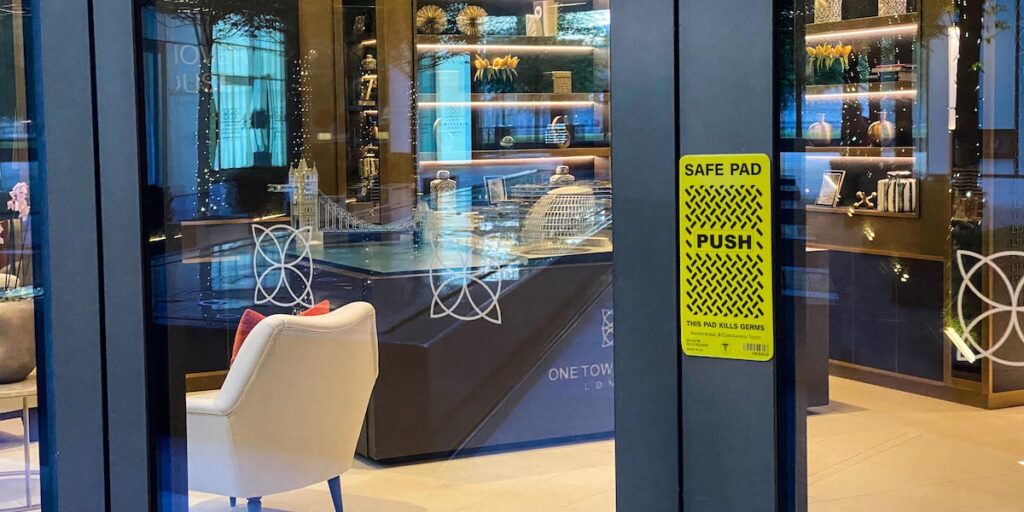
Veraco SAFE PAD™ Antimicrobial Door Push Pad.
–
Antimicrobial Technology
There are four different antimicrobial technologies in existance. The first, which we’ve already touched upon, is the use of organic products to fight harmful microbes, whilst the other three are based on metals; Silver-Ion, Copper and Zinc.
Silver has been proven to be an effective weapon against bacteria, fungi and viruses. Its positively charged silver ions (Ag+) possess the antimicrobial effect, targeting microorganisms and preventing their development.
You’ll find silver ions woven into items of clothing such as socks and t-shirts as well as towels and cleaning cloths, which neutralise bacteria when they come into contact with the product.
Copper-Ions have been shown to destroy DNA and other genetic materials inside microbes, preventing them from mutating and coming back in a potentially more harmful form. According to Clean Room Technology, copper can kill 99% of most pathogens within two hours of contact and, in some cases, performed better than more expensive metals with antimicrobial properties, namely silver and gold.
Zinc-based technologies provide wide antimicrobial protection, even more so than silver and copper technologies. Zinc-based products are effective against bacteria as well as the growth of fungi including mould, mildew and algae. These agents break the cell walls, preventing the function, growth and development of microbes.
Zinc technologies aren’t designed to replace disinfectants and other antimicrobial products, instead they enhance and complement the effectiveness of normal chemical disinfecting techniques, bringing another layer of protection against bacteria, mould and mildew.
In 2020, several months into the coronavirus pandemic, jeans brands Diesel, DL1961 and Warp + Weft promoted pairs of jeans that supposedly neutralised any traces of SARS-CoV-2, the virus that causes Covid-19, that land on their surfaces.
Popular sports brand Under Armour also launched a range of face masks in June 2020 that utilised a textile coating technology called PROTX2 AV, created by Intelligent Fabric Technologies North America (IFTNA). This zinc-based coating kills 99.9% of the COVID-19 virus within 10 minutes of contact, according to IFTNA.
–
What chemicals are in popular antimicrobial goods?
Most antimicrobial products found in your home contain a similar range of ingredients. Most household disinfectants contain some form of chlorine bleach, alcohol, quaternary ammonium chlorides, pine oils or phenolic compounds.
If used incorrectly, all of these ingredients can cause some health effects. A disinfectant product is considered more hazardous than a similar cleaner that does not contain antimicrobial agents.
Most hand soaps tend to contain Triclosan, which is also found in many other household products. Triclosan is added to many consumer products to reduce or prevent bacterial contamination, such as antibacterial soaps and body washes, toothpastes and some cosmetics. It can also be found in clothing, furniture and kitchenware, where it has been added to cutting boards, food storage containers and other kitchen utensils to prevent microorganisms growing on them.
Useful for when you don’t have access to hot water and soap, hand sanitisers have become a staple part of our lives over the past 18 months. Many hand sanitisers are made without alcohol, but it is the main ingredient in products that are most effective in breaking down bacteria and viruses.
It is recommended to purchase a hand sanitiser made up of at least 70% alcohol, because that alcohol – as well as being a disinfectant safe to use on your skin – has the job of breaking up the outer coatings of bacteria and virus particles.
An effective hand sanitiser will contain an alcohol such as ethanol, which breaks apart the lipid-based coatings of bacteria and viruses, destroying them in the process. These sanitisers will also contain a percentage amount of water, usually 20-30%, which acts as a carrier for the ingredients in the sanitiser.
All antimicrobial products need to be given a certain amount of time to do their job and be used in the correct concentration in order to be most effective. It is important, therefore, to follow the instructions provided carefully to maximise their impact.
