
An antibacterial product won’t protect you from COVID-19, an antimicrobial will..
–
Antimicrobials vs Antibacterials: What’s the Difference?
While the terms “antimicrobial” and “antibacterial” often appear to have the same meaning, there is an essential difference in their definitions regarding the type of microorganisms that they can kill and stop from spreading.
This difference in the meaning of the two terms has become increasingly important because of the coronavirus pandemic. Where an antibacterial product won’t protect you from COVID-19, an antimicrobial will. So what’s the difference between antibacterial and antimicrobial?
–
What Does Antibacterial Mean?
An antibacterial substance inhibits the growth of bacteria cells or kills them. This prevents them from spreading illnesses caused by bacterias, like:
- E. coli
- Shigella
- Salmonella.
Antibacterial products can only prevent bacterial growth and spread and are not effective against fungi and viruses. Antibacterial products contain active ingredients that create hostile environments that are inhospitable for bacteria.
–
What Does Antimicrobial Mean?
An antimicrobial agent is a substance that works to eliminate or inhibit the growth of a variety of microorganisms, like bacteria, fungi and viruses. They’re also effective against certain parasites and mites, such as house dust mites.
Antimicrobials protect against a variety of different illnesses and infections including:
- Coronavirus
- Influenza
- Ebola
- The common cold.
Antimicrobials work by disrupting and stopping the growth of a variety of microorganisms at a cellular level. These microorganisms would ordinarily self-replicate, meaning that they can spread and cause infections. Antimicrobial products contain agents, like silver ions, that protect against microorganisms.
The silver ions in these products attach themselves to a cell’s proteins, interfere with its DNA and block its respiratory system. This stops the cell’s energy production and causes it to burst.
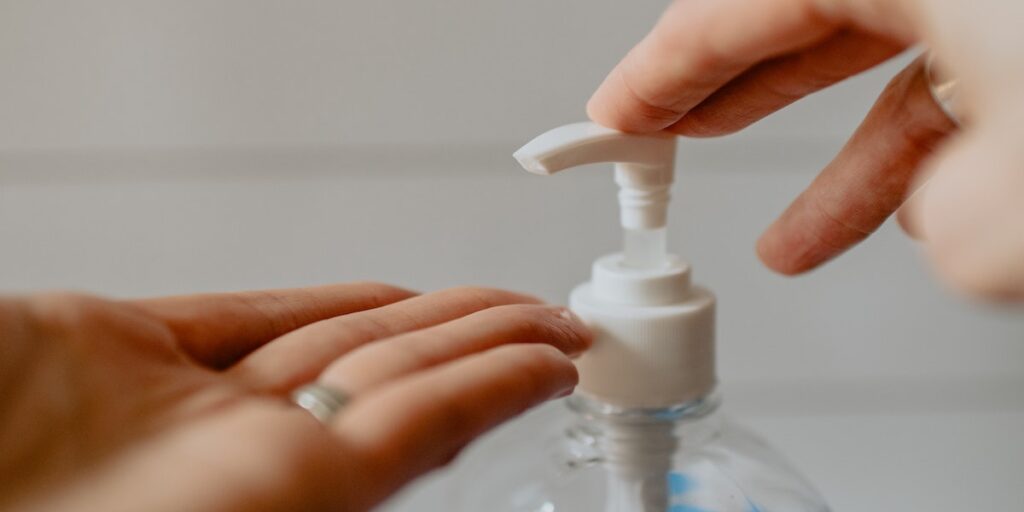
Alcohol-based hand sanitisers have antimicrobial properties.
–
Common Antimicrobial Products
Despite antimicrobials being more effective against the spread of germs, it’s “antibacterial” that we see on product labels more often. But there are many products available that are antimicrobial, both off the shelf and from nature itself. Everyday products that are often antimicrobial include:
- Hand soap
- Shampoo
- Toothpaste
- Bleach.
Many natural products are antimicrobial, like tea tree oil, turmeric oil, zinc, copper and silver. In light of the pandemic, product developers have started to use natural antimicrobial agents like copper and silver to create coverings for door handles, shopping trolleys and other common touchpoints to prevent the spread of viruses.
–
Antimicrobial vs Antibacterials: Which Is better?
The difference between antimicrobial and antibacterial is that while an antibacterial agent is effective against an extensive range of bacteria, it’s ineffective against fungi and viruses. Antimicrobial agents, however, offer protection against fungi, viruses, parasites, mites and bacteria.
An antimicrobial product will kill or prevent the development of potentially harmful microorganisms like bacteria, protozoa, viruses, algae, yeast and certain worms.
If you’re looking for protection against bacteria, then an antibacterial substance is perfect. But for complete protection against viruses, fungi, bacteria and more, an antimicrobial agent is the best choice.
Want to know more about how antimicrobial products can help protect you? Get in touch with the experts at Veraco.
